Why Putting Your Property in a Trust Matters (And How It Actually Works)

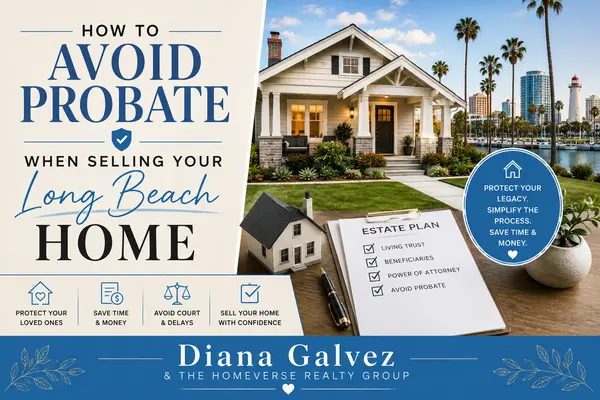
If your home is titled in your name alone right now, here's the uncomfortable math: when you pass away, your family could spend 12 to 18 months and tens of thousands of dollars in California probate court just to get the deed transferred to them. A revocable living trust is one of the simplest ways to avoid that entirely, and it doesn't cost you control of the property while you're alive.
I'm Diana Galvez, a REALTOR® with HomeSmart Realty Group's Homeverse Team, and this comes up constantly, both with sellers whose parents' estate is tied up in probate, and with buyers and current owners asking whether they should retitle their home into a trust. I'm not an attorney, so the legal drafting isn't something I do, but I can walk you through what a trust means for your property specifically and when it's worth talking to an estate planning attorney.
What a Living Trust Actually Does for Your Property
A revocable living trust is a legal arrangement where you transfer ownership of your home (and other assets) from yourself, personally, into the trust, with you as trustee still fully in control. You can sell, refinance, or change your mind at any time, it's revocable. The difference shows up only when you die or become incapacitated: instead of your property sitting frozen until a probate court sorts things out, your named successor trustee can distribute or sell it according to your instructions, typically within 30 to 60 days.
A trust also stays private. A will has to go through probate court, where it becomes a public record that anyone can look up, including your assets, your debts, and who inherited what. A trust never enters the court system at all.
The Real Cost of Skipping This Step: California Probate
California probate isn't quick or cheap. Statutory attorney and executor fees are calculated on your estate's gross value, not your equity, so even a mortgaged home counts at full value. On an $800,000 estate, combined statutory fees run around $38,000. On $1 million, they exceed $40,000. On $1.5 million, more than $50,000, before court costs, the probate referee, and bond.
Timeline-wise, California probate averages 12 to 18 months statewide, and Los Angeles County cases routinely run 18 to 24 months. If your only asset above California's 2026 probate thresholds ($750,000 for real property, $208,850 for other personal property) is your home, your family could be looking at a year and a half in court over a house that a trust would have transferred in under two months.
Putting Your Home in a Trust Won't Trigger a Tax Reassessment
This is the question I get most: "won't this mess up my property taxes?" No, not when it's done correctly. Under California Revenue and Taxation Code section 62(d), transferring your home into a revocable living trust is excluded from reassessment as long as the trust is revocable by you and is for your benefit (or your spouse's or domestic partner's). The county treats you as the same owner, and your Prop 13 base year value stays exactly where it is.
The county assessor will still want a Preliminary Change of Ownership Report (PCOR) filed when the deed is recorded. That's not a tax bill, it's just how you tell the assessor this transfer qualifies for the exclusion. Where reassessment can happen later is if the trust becomes irrevocable or the beneficiaries change in a way that shifts real ownership, so this is exactly the kind of detail worth confirming with an attorney before you sign anything.
How the Trust Transfer Actually Works
Once your attorney has your trust drafted, moving the house into it is done with a trust transfer deed, essentially a grant deed conveying the property from you as an individual to yourself as trustee. The legal description has to match your existing deed exactly, and every current owner on title needs to sign in front of a notary before it's recorded with the county. It's a mechanical, well-established process, but it has to be done precisely, a mismatched legal description or a missed signature can create title problems years later, often discovered right when you're trying to sell.
What This Means If You're Buying or Selling a Home Already in a Trust
If you're selling a home that's titled in a trust, your title company will ask for a Certification of Trust (or the trust document itself) confirming who the acting trustee is and that they have authority to sign on the trust's behalf. This is routine, but it's worth having that paperwork ready before you list so it doesn't slow down escrow. If you're buying a home from a trust, nothing changes on your end, the trustee simply signs in their trustee capacity instead of as an individual seller.
Is a Trust Right for You?
If you own real estate in California, especially in areas where home values routinely clear the $750,000 probate threshold on the house alone, a revocable living trust is worth a serious conversation with an estate planning attorney. Setup typically runs $2,000 to $4,500, a fraction of what probate can cost your family later. I'm happy to connect you with estate planning attorneys I trust, and once your trust is in place, I can help make sure your property title, homeowner's insurance, and any other real estate paperwork all line up correctly.
You can reach me at (323) 807-4184 or casasbydianag@gmail.com. Let's make sure your property is set up the right way.
Diana Galvez, REALTOR®
Homeverse Team, HomeSmart Realty Group | DRE #02040313
Serving Long Beach, and the greater Los Angeles & Orange County area
This post is for general informational purposes and is not legal or tax advice. Please consult a licensed estate planning attorney or CPA about your specific situation.
Categories
- All Blogs (30)
- ADUs (1)
- Alamitos Beach (1)
- Bellflower (1)
- Belmont Heights (1)
- Belmont Shore (1)
- Bixby Knolls (2)
- Bluff Park (1)
- California Heights (1)
- Downey (1)
- Downtown Long Beach (1)
- Eastside (1)
- El Dorado Park Estates (1)
- Estate Planning (1)
- Financing & Lending (1)
- First-Time Buyers (1)
- Investment Properties (1)
- Los Altos Long Beach (1)
- Los Cerritos (1)
- Luxury Homes (1)
- Market Updates (2)
- Naples (1)
- New Construction (1)
- North Long Beach (1)
- Probate & Estate Sales (1)
- Retirement (1)
- Rose Park (1)
- Seller Tips (1)
- Wrigley Long Beach (1)
Recent Posts