
The Fed Just Raised Rates Again, Here's the Part the Headlines Are Skipping
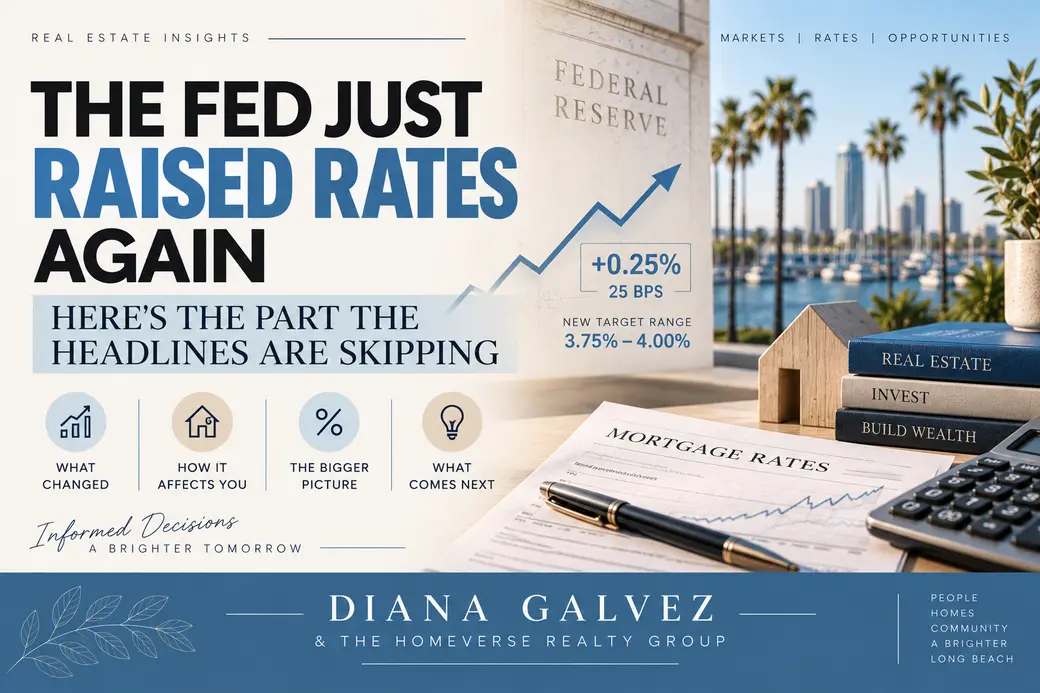
On September 16, the Federal Reserve raised its benchmark rate by a quarter point to a range of 3.75% to 4%, its first increase since 2023. If you saw that headline and felt a little uneasy about buying or selling right now, that's a normal reaction. But the reaction and the reality are two different things, and the reality here actually works in your favor more than you'd think.
I'm Diana Galvez, a REALTOR® with HomeSmart Realty Group's Homeverse Team, and my job when rate headlines hit isn't to tell you not to worry, it's to show you exactly what changed and what it means for your specific situation. Here's the honest breakdown.
What Actually Happened
The Fed's move pushed mortgage rates up slightly, the average 30-year fixed sits in the high 6s to low 7% range as of this month, compared to roughly 6.3% a year ago. Fed officials have signaled one more possible hike before year end, with projections landing between 4.1% and 4.4%. That's real, and it's worth planning around. But a quarter point on the Fed's benchmark rate doesn't move your mortgage payment nearly as much as the headline makes it sound, mortgage rates track the bond market more than the Fed funds rate directly, and they'd already priced in most of this move before it was announced.
The Bright Side If You're Buying
Here's what's actually happening on the ground: sellers gave buyers concessions in 46.2% of home sales this year, the highest share for any spring period since Redfin started tracking it in 2019. Nationally, there are now roughly 47% more sellers than buyers, which means you're negotiating from a position of strength that didn't exist two or three years ago.
That leverage shows up in real ways. Sellers are increasingly offering temporary rate buydowns, essentially prepaying down your interest rate for the first year or two of the loan, which can meaningfully lower your monthly payment without anyone touching the sale price. You can also ask for closing cost credits or repair credits instead of, or in addition to, a lower price. Fewer buyers competing for the same homes means less pressure to waive inspections or write an emotional offer just to win.
And there's the old real estate line that's still true: you marry the house, you date the rate. Buying now locks in today's price and terms on a home you actually want, and refinancing later if rates drop is a paperwork problem, not a permanent one. Waiting for the "perfect" rate has historically cost buyers more in rising home prices than it's saved them in interest.
The Bright Side If You're Selling
A slower-moving market sounds scary until you realize what it actually filters out: tire-kickers. The buyers touring your home right now are serious, pre-approved, and ready to move, not casually browsing because rates made it "free" to look. That means fewer wasted showings and more qualified conversations.
Concessions also work in your favor as a tool, not just a cost. Offering a rate buydown or a closing credit lets you keep your asking price intact while still making the deal pencil out for a buyer worried about their monthly payment. That's a very different conversation than dropping your price, and it often gets you to a signed contract faster.
It's also worth remembering that home values are far more resilient than mortgage rate headlines suggest. Long Beach specifically has held onto price gains through multiple rate cycles over the past few years, because the number of homes for sale here has stayed tight even as buyer urgency has shifted. Rate cycles come and go. Well-located, well-priced homes keep selling in both directions.
What This Isn't
This isn't 2008. That was a credit and lending crisis. This is a Fed managing inflation with the tools it has, in an economy that's still adding jobs and where home equity nationally remains near record highs. Higher rates are a real cost to plan for, and I'm not going to tell you otherwise, but they're a manageable variable, not a five-alarm fire.
What To Actually Do With This Information
If you're buying, get pre-approved now so you know your real number, then talk to your lender specifically about temporary buydown options before you write an offer. If you're selling, talk to me about pricing your home to attract serious buyers and structuring concessions strategically instead of chasing the market down with price cuts. Either way, the worst move is freezing up over a headline instead of getting the specific numbers for your situation.
You can reach me at (323) 807-4184 or casasbydianag@gmail.com. Let's figure out what this actually means for you, not just what it means in the news.
Diana Galvez, REALTOR®
Homeverse Team, HomeSmart Realty Group | DRE #02040313
Serving Long Beach, and the greater Los Angeles & Orange County area
Rates and market conditions change quickly. The figures in this post reflect data available as of September 17, 2026. Please talk to your lender for a current, personalized rate quote.
Categories
- All Blogs (31)
- ADUs (1)
- Alamitos Beach (1)
- Bellflower (1)
- Belmont Heights (1)
- Belmont Shore (1)
- Bixby Knolls (2)
- Bluff Park (1)
- California Heights (1)
- Downey (1)
- Downtown Long Beach (1)
- Eastside (1)
- El Dorado Park Estates (1)
- Estate Planning (1)
- Financing & Lending (1)
- First-Time Buyers (1)
- Investment Properties (1)
- Los Altos Long Beach (1)
- Los Cerritos (1)
- Luxury Homes (1)
- Market Updates (2)
- Naples (1)
- New Construction (1)
- North Long Beach (1)
- Probate & Estate Sales (1)
- Retirement (1)
- Rose Park (1)
- Seller Tips (1)
- Whittier (1)
- Wrigley Long Beach (1)
Recent Posts